
The Calculators Hub Blog
Methodology notes, verification standards, and guides from the team behind every calculator on the platform.
Fractions vs. Decimals vs. Percentages: What's the Difference?
Three-eighths, 0.375, and 37.5% are the exact same value written three different ways. Here's why all three forms exist, how to convert between them, and why 1/3 as a percentage never quite comes out even.
Read article
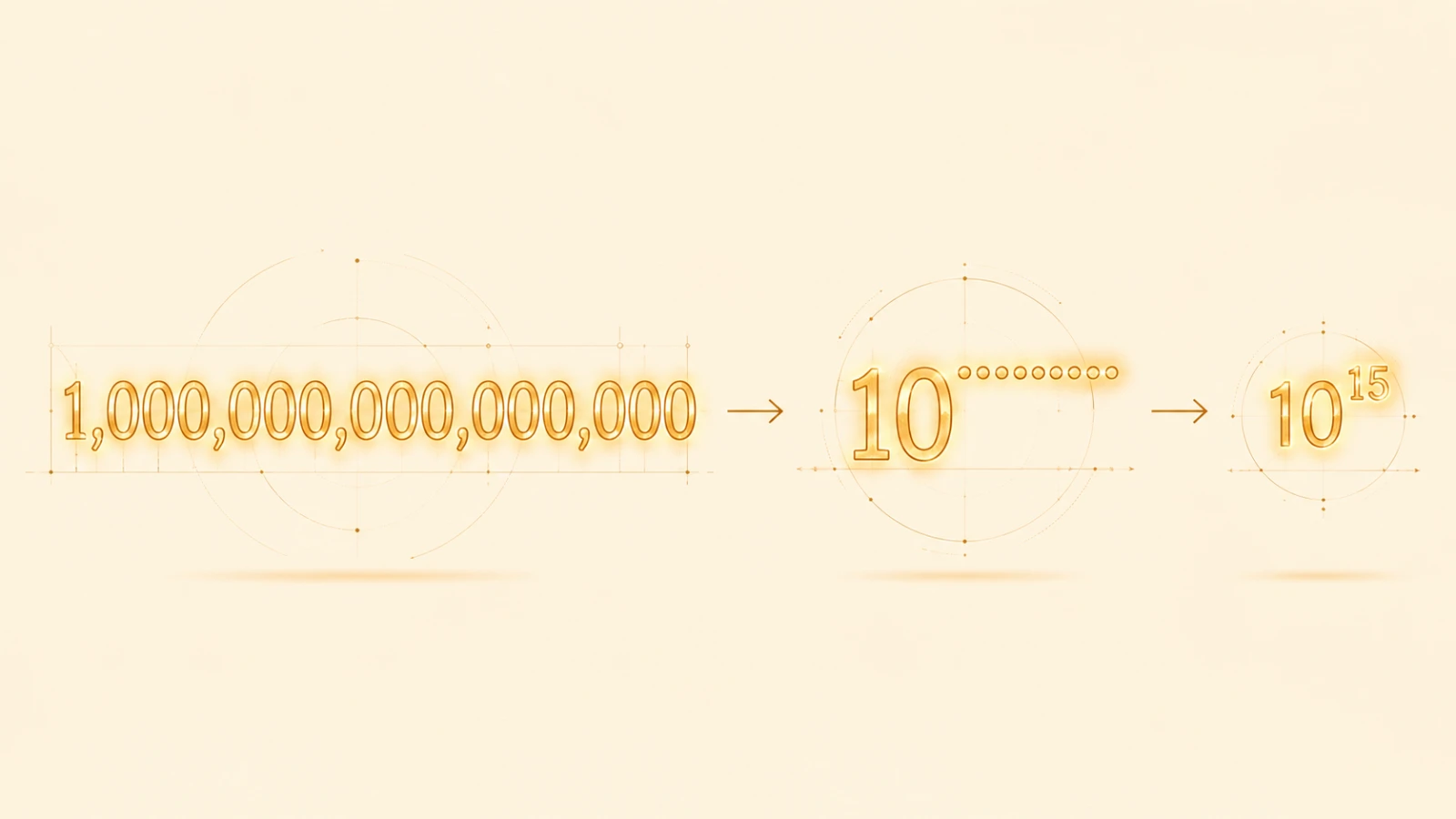
Scientific Notation vs. Decimal Notation vs. Engineering Notation: What's the Difference?
47,500,000 can be written three different ways, and only one of them lines up cleanly with the k, M, and µ prefixes on a multimeter or datasheet. Here's exactly how decimal, scientific, and engineering notation differ.
Read article
Percentage vs. Percentage Point vs. Percent Change: What's the Difference?
A 2% rise and a 2 percentage point rise from the same 5% starting point land on completely different numbers, 5.1% versus 7%. Here's exactly how percentage, percentage point, and percent change differ, and why news headlines mix them up constantly.
Read article
What Is Momentum? Definition, Formula, and Examples
Momentum measures how hard it is to stop something that's moving, mass times velocity, and it behaves very differently from force or kinetic energy even though all three get tangled up in everyday language.
Read article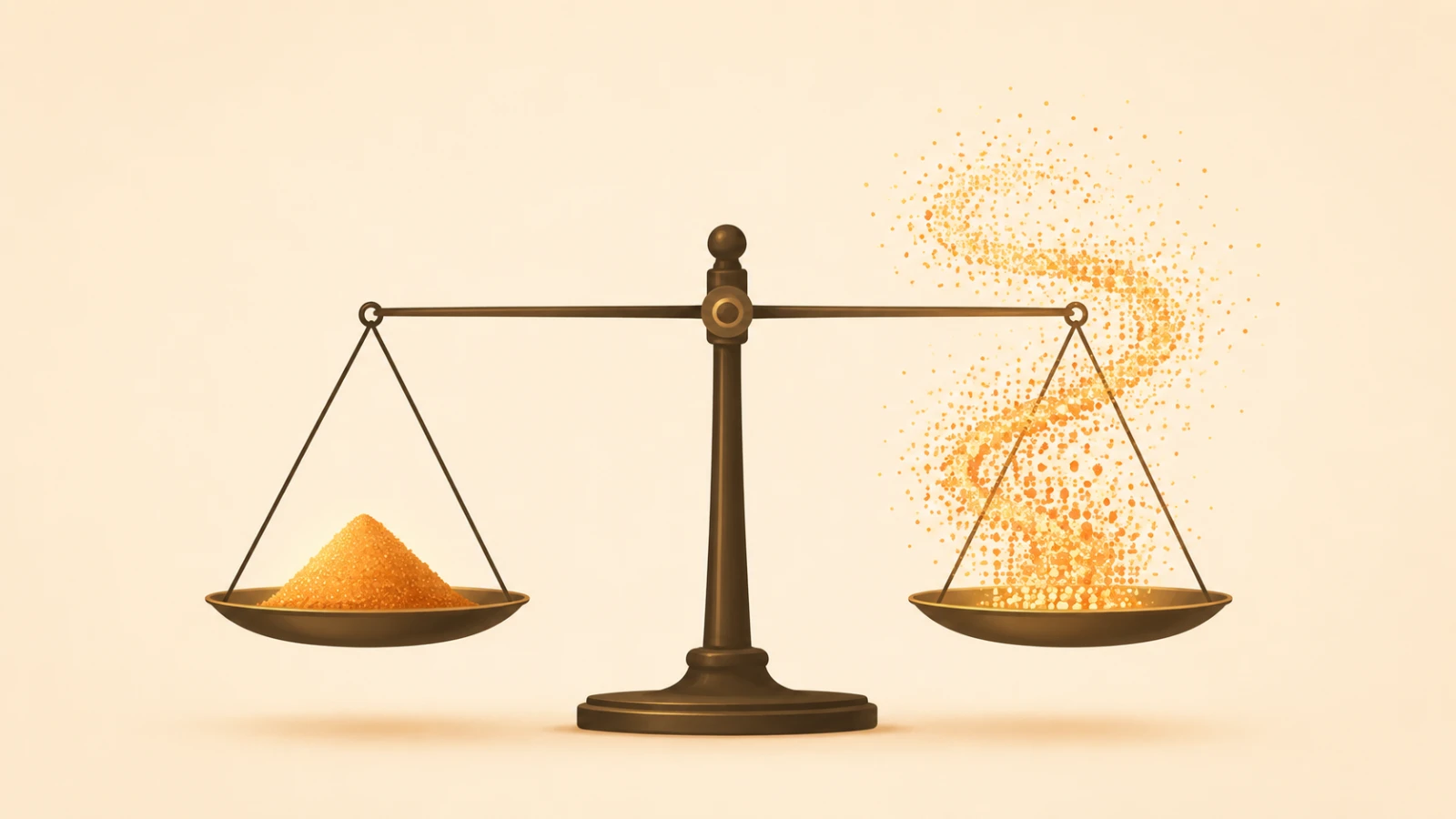
What Is a Mole in Chemistry? A Simple Definition and How to Calculate It
A mole is just a counting unit, like a dozen, except instead of 12 it counts 6.022 x 10^23, the specific number needed to bridge atoms you can't see with grams you can weigh on a bench scale.
Read article
What Is BMI? A Simple Guide to the Formula and Healthy Ranges
BMI was never designed to diagnose an individual's health, it was a 19th-century statistician's tool for studying populations, and that mismatch is the root of most of the criticism the formula gets today.
Read article
What Is Molarity? Definition, Formula, and Examples
Molarity is moles of solute per liter of solution, not per liter of solvent, and that one distinction is behind more lab calculation errors than almost anything else in introductory chemistry.
Read article
What Is BMR? A Step-by-Step Guide to Calculating It
BMR is the number of calories your body burns just staying alive, before a single step is taken, and it's the starting point every calorie target for weight loss or maintenance should actually be built from.
Read article
What Is the Heat Index? A Quick Guide to How It's Calculated
At 90 degrees with 70% humidity, it doesn't feel like 90 degrees, it feels like 106, and the reason comes down to how well your sweat can actually evaporate.
Read article
What Is Humidity? Definition, Types, and How to Measure It
100% humidity doesn't mean it's raining, and it doesn't mean the air has turned to water either, it means the air is holding all the moisture it can at that exact temperature, nothing more.
Read article
What Is Projectile Motion? Definition, Formula, and Examples
A thrown ball, a fired artillery shell, and a stream of water from a hose all follow the same parabolic path, and the same three formulas predict exactly where each one lands.
Read article
What Is Velocity? Definition, Formula, and Examples
Velocity is more than a fancy word for speed, it's a vector quantity that carries direction along with it, and mixing the two up is one of the most common mistakes in introductory physics.
Read article
How to Calculate Scientific Notation: Rules and Examples
A step by step guide to converting numbers into scientific notation and back, plus how to add, subtract, multiply, and divide them without mixing up the exponents.
Read article